Moving with narrow staircases in SE5: practical fixes
Posted on 04/07/2026

Anyone who has tried moving a sofa, mattress, wardrobe, or even a stack of boxes up a tight SE5 staircase knows the feeling: the stairs look just manageable until you stand at the bottom with the item in your hands. Then the turning space disappears, the bannister becomes an obstacle, and suddenly the whole move needs a rethink. That is exactly where Moving with narrow staircases in SE5: practical fixes comes in. The good news? A difficult staircase does not automatically mean a failed move. With a bit of planning, the right moving method, and a few practical workarounds, you can usually make the job safer, calmer, and far less stressful.
This guide breaks down what works in real homes around SE5, from compact flats and Victorian terraces to awkward upper-floor access. You will find step-by-step fixes, common mistakes to avoid, and a few judgement calls that save time on the day. Let's face it, no one wants to discover at the landing that the wardrobe simply will not turn.
Why Moving with narrow staircases in SE5: practical fixes Matters
Narrow staircases are more than a nuisance. They shape the whole move. If the staircase is steep, turn-heavy, or simply tight on both sides, every large item becomes a small logistics puzzle. In SE5, that is a common reality in older conversions, maisonettes, top-floor flats, and homes with traditional London layouts. Even when a property looks straightforward from the street, the internal access can be the part that slows everything down.
Why does it matter so much? Because access problems create three immediate risks: damage to the property, damage to belongings, and injuries caused by rushed lifting or awkward twisting. A sofa can scrape a painted wall in one careless turn. A bed base can catch on a landing. A freezer, oddly enough, can become the item nobody quite wants to admit was the wrong choice for the staircase. That is where preparation pays off.
There is also a time factor. A move that should take an afternoon can drag into the evening if the team keeps stopping to reassess each item. If you live near busy routes or time-restricted access points, maybe around SE5 terraces or flats with limited parking, the delay can spill into the rest of the schedule. A little forethought avoids that domino effect.
Practical takeaway: narrow stairs are not just an access issue; they are a planning issue, a safety issue, and a property-protection issue all at once.
How Moving with narrow staircases in SE5: practical fixes Works
The basic idea is simple: you reduce the size, weight, or awkwardness of each load before it reaches the staircase. Sometimes that means dismantling furniture. Sometimes it means using the right lift-and-turn technique. Sometimes it means taking the item apart in the room rather than trying to force it around the stairs. And sometimes, to be fair, it means deciding that a piece should go by another route entirely.
In practice, the process usually follows a chain of decisions:
- Measure the route from front door to final room, including landings, banisters, ceilings, and door widths.
- Identify problem items such as sofas, mattresses, wardrobes, white goods, desks, and anything with a fixed frame.
- Choose a handling method based on size, fragility, and turning space.
- Protect the staircase and walls with coverings, padding, or temporary barriers.
- Move one item at a time with clear verbal coordination.
- Use alternative solutions if the item is simply too large or risky for the stairwell.
The best fixes are rarely dramatic. It is usually the small things that make the biggest difference: removing a mirror, taking the feet off a sofa, sliding out drawers, wrapping sharp corners, or sending a mattress up on its side rather than flat. Those tiny adjustments can turn a stressful stair move into a manageable one.
If you want a broader view of planning around access, it can help to read this guide to a calmer house move alongside your stair strategy. They work well together.
Key Benefits and Practical Advantages
Doing the job properly is not just about avoiding disaster. There are some real, practical upsides to using stair-smart methods from the start.
- Less damage: careful routing and padding reduce scuffs, chips, and torn upholstery.
- Less strain: better handling means fewer awkward lifts and fewer sore backs the next day.
- Better time control: you spend less time stuck halfway up a landing wondering what on earth to do next.
- More predictable costs: fewer delays and fewer emergencies usually mean a smoother quote-to-completion experience.
- Safer decision-making: if an item clearly will not fit, you know early enough to change approach.
There is also a psychological benefit that people often overlook. Once the access plan is clear, the move feels less chaotic. Even if the staircase is awkward, you stop treating it like a surprise. That alone takes some pressure off.
A smart pre-move declutter also helps more than most people expect. If you have not already sorted what is worth moving, it is worth reviewing these pre-move decluttering strategies. Less clutter means fewer items competing for stair space. Simple, but effective.
Who This Is For and When It Makes Sense
This approach makes sense for anyone moving through a tight or awkward stairwell, but it is especially useful if you are in one of these situations:
- you live in a SE5 flat with a narrow internal staircase
- your property has a sharp turn at the landing
- you own furniture that cannot be lifted in one easy piece
- you are moving on your own or with a small team
- you need to protect freshly painted walls or fitted banisters
- you are working to a tight schedule and cannot afford trial-and-error on the day
It also makes sense for landlords, students, families, and small businesses moving office equipment or storage contents through residential staircases. In office moves, oddly enough, the stair challenge can be even worse because items like filing cabinets and printers never seem to come in sensible shapes.
One useful question to ask is this: is the staircase the main route, or is it the least-bad route? If it is the latter, you may need to rethink the whole loading plan rather than just the lifting technique.
Step-by-Step Guidance
Here is a practical order of operations that works well in real-world SE5 moves.
1. Measure before anyone lifts
Measure the narrowest points: stair width, landing depth, ceiling height, door frames, and any awkward bends. Do not guess. Tape measures are cheap; damaged plaster is not.
2. Identify the troublemakers
Large sofas, ottoman beds, wardrobes, mattresses, and solid wood cabinets are the usual suspects. If an item has fixed panels or a bulky frame, treat it as a stair risk early.
3. Strip items down as far as safely possible
Remove shelves, drawers, legs, cushions, doors, and detachable parts. If a bed or wardrobe can be dismantled, do it before the move, not halfway through the hallway.
4. Protect the staircase
Use blankets, corner guards, and floor coverings where needed. The aim is not fancy presentation; it is to create some forgiveness around those tight turns.
5. Plan the carry route
Decide who leads, who guides from below, and who clears the landing. Quiet communication matters. A simple "stop", "tilt", or "up a little" is often enough. No speeches required.
6. Use controlled angles, not brute force
Turn furniture onto its side only when that reduces overall width and keeps weight balanced. Sometimes the longest edge needs to lead. Sometimes the shortest. It depends on the stair geometry, which is why the measurement step matters so much.
7. Pause early if the item binds
If an item jams, stop. Do not force it. A forced move is where most damage happens. Reassess the angle, remove a part, or send the item another way.
8. Have an exit strategy
For items that clearly will not pass, plan an alternative before moving day. That might mean storing the item temporarily, replacing it, or using a specialist service that deals with awkward access.
If the furniture you are moving is particularly bulky, you may find it helpful to browse furniture removal options in Denmark Hill as part of your wider planning. The right approach often depends on the item, not just the postcode.
Expert Tips for Better Results
These are the little adjustments that make a stubborn staircase feel far less hostile.
- Take photos of the route. A quick picture of the landing and turns can help you spot pinch points before moving day.
- Use a mattress bag or furniture wrap. It helps with grip, hygiene, and protection when brushing close to walls.
- Keep hardware in labelled bags. Tiny screws disappear fast. Ask me how we know. Well, no, don't ask.
- Load lighter items first if you are testing the route. That gives you a low-risk way to confirm whether a bigger piece will fit.
- Clear the stairwell completely. Shoes, umbrellas, plant pots, and random hallway clutter all become trip hazards.
- Protect the corners with extra padding. Corners are where white walls and banisters seem to collect marks.
- Keep a toolkit nearby. Allen keys, screwdrivers, tape, and a utility knife can save the day.
One more thing: if the move involves a bed, check out practical bed and mattress moving advice. Mattresses are deceptively awkward in stairwells. Light enough to carry, yes, but not always easy to steer.
If you are moving heavier items and want a safer handling mindset, this guide to kinetic lifting is a sensible companion read. It explains the body mechanics without making it sound like a gym lecture.

Common Mistakes to Avoid
Most staircase problems are preventable. The issue is usually speed, assumptions, or a bit of overconfidence on the day.
- Skipping measurements. Guessing the fit is a gamble, and not a fun one.
- Forcing bulky items around corners. If it catches, stop and rethink.
- Ignoring wall protection. A narrow staircase has no room for carelessness.
- Overloading one person. Solo lifting has its place, but not on a steep landing with a sofa.
- Leaving dismantling until moving day. That is how small jobs become long ones.
- Failing to clear the route. One stray box can throw off the whole carry.
- Not planning for disposal or storage. If an item will not fit, you need a Plan B, not a shrug.
Truth be told, the most expensive mistake is often trying to "make it work" for too long. A five-minute rethink can prevent a fifty-minute struggle.
Tools, Resources and Recommendations
You do not need a warehouse full of equipment. A compact set of tools is usually enough for narrow-staircase work.
| Tool or resource | What it helps with | Best use case |
|---|---|---|
| Furniture blankets | Surface protection and grip | Protecting banisters, door frames, and item edges |
| Stretch wrap | Keeps drawers, doors, and loose parts secure | Cabinets, tables, and shelving units |
| Ratchet straps | Stabilises heavy items during carries | Team lifts and awkward furniture shapes |
| Furniture sliders | Helps reposition items before the stair lift | Heavy pieces on hard floors |
| Allen keys and screwdrivers | Fast dismantling and reassembly | Flat-pack furniture, bed frames, wardrobes |
| Route photos and measurements | Planning the turn points accurately | Every narrow-stair move, honestly |
For packing support, these packing strategies for a home relocation can help you keep boxes light, balanced, and easier to carry upstairs. If you are using boxes on a tight staircase, box weight matters more than box count.
You may also want a better sense of how your move fits into wider local logistics. A useful read is this SE5 moving guide for flats and terraces, which gives a broader picture of local access challenges.
Law, Compliance, Standards, or Best Practice
For most household moves, there is no special legal rule that says how a narrow staircase must be used. But there are still strong best-practice expectations around safety, reasonable care, and avoiding preventable damage. In the UK, moving work should be carried out with proper attention to manual handling, risk awareness, and safe working methods. That is true whether you are moving one wardrobe or a whole flat.
In plain English, the main principles are straightforward:
- do not put people at unnecessary risk
- do not force loads that are clearly too large or too heavy for the route
- use enough people for the job
- protect the property where practical
- stop and reassess if conditions change
Insurance and safety planning also matter. If a move involves an awkward stairwell, it is wise to understand what is covered, what exclusions may apply, and how the mover handles damage claims or access issues. If you are comparing providers, read the details carefully rather than assuming every service works the same way. They do not.
For a closer look at how a moving business frames safety and risk, see insurance and safety information. And if you are comparing service levels generally, the services overview is a practical place to start.
Options, Methods, or Comparison Table
Different situations call for different fixes. Here is a simple comparison of the most common approaches.
| Method | Best for | Pros | Limitations |
|---|---|---|---|
| Dismantling furniture | Wardrobes, beds, tables, shelving | Reduces size, easier corners, safer carry | Needs tools and time; some items are not designed for it |
| Two-person carry with angle turns | Mattresses, sofas, medium furniture | Flexible, efficient, often enough for stair access | Requires coordination and good route planning |
| Protect-and-pass method | Items that fit but scrape close to walls | Minimises damage while keeping the move moving | Not ideal if the item is already close to the width limit |
| Alternative access or temporary storage | Oversized or fragile items | Avoids forcing a bad fit | May add cost or require extra planning |
If you are dealing with an item that is more specialist than standard furniture, for example a piano, it deserves a different level of care. You can read more about that in this professional piano moving guide or at piano removals in Denmark Hill. Pianos and narrow stairs are not a casual combination.
For especially awkward access near busy parts of SE5, you may also find this local article useful: stair access tips near Denmark Hill station. Different streets, different constraints. That's London for you.
Case Study or Real-World Example
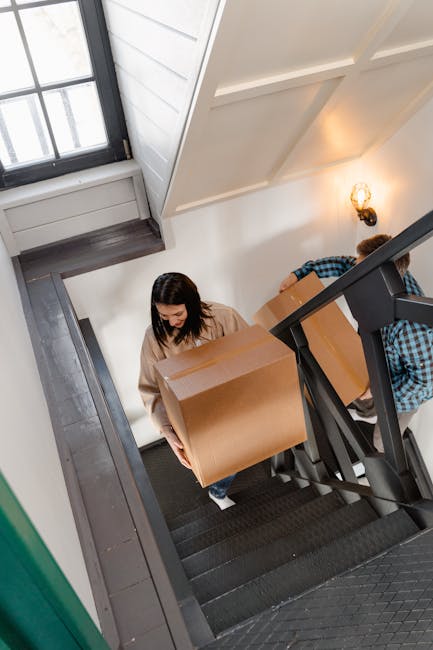
Here is a realistic example based on a typical SE5 flat move. A couple on an upper floor needed to get a double bed, a compact sofa, two bookcases, and a freezer down a narrow staircase with a tight turn at the half-landing. At first glance, the staircase looked manageable. In reality, the turn was the issue. The freezer was the first problem because it had to stay upright, and the sofa was the second because of its width and arm shape.
The fix was not glamorous. The team dismantled the bed frame, removed the sofa cushions and protective feet, wrapped the banister edge, and moved the freezer last once the route was clear. The bookcases were taken apart upstairs before any carry began. One item at a time. One decision at a time. Nothing fancy.
The outcome? Less strain, fewer wall marks, and no last-minute panic on the landing. The couple also chose to place a couple of items in storage for a week rather than forcing them through the stairwell. That small decision saved a lot of frustration.
If you are considering that kind of temporary workaround, take a look at storage in Denmark Hill. And if bulky items are part of the issue, bulky waste removal solutions for flats may help you decide what is worth moving and what should go.
Practical Checklist
Use this checklist before move day. It keeps the job grounded.
- measure the staircase, landings, and door frames
- identify every item that may need dismantling
- gather tools, tape, blankets, and wrap
- clear hallways, stair treads, and entry points
- protect bannisters, corners, and floors
- label screws and fittings for reassembly
- decide which item goes first and which goes last
- confirm who is guiding, who is lifting, and who is spotting
- plan a fallback if an item will not safely turn
- check whether storage, disposal, or specialist handling is needed
For a smoother start overall, it can also help to review moving your bed and mattress efficiently and how to leave the house spotless before you go. Those are the unglamorous jobs that make the final handover much easier.
Quick summary: if the staircase is narrow, do not rely on strength alone. Use preparation, protect the route, reduce the load, and keep a backup plan ready.
Get a free quote today and see how much you can save.
Conclusion
Moving with narrow staircases in SE5 is rarely about brute force. It is about judgement. Measure carefully, dismantle what you can, protect the route, and do not be afraid to change the plan when the stairwell says "not this way". That kind of flexibility is what keeps the move safe and keeps your belongings looking like they still belong to you.
If you take only one thing from this guide, let it be this: the staircase is part of the move, not just part of the building. Treat it that way and everything becomes easier to manage. Not easy, maybe. But easier. And sometimes that is enough to turn a very stressful day into a sensible one.
For readers comparing services and move types in the area, you may also find man and van support in Denmark Hill, flat removals in Denmark Hill, and general removals in Denmark Hill helpful when deciding the next step.